Smart farm IoT in the UAE means sensors in the greenhouse and field, a gateway and network that carry their readings back, power that survives the summer, and a dashboard with alerts people act on. Listonics builds those IT layers and connects to existing controllers. The grower or their agronomist decides what the numbers should be.
Proof, not promises
Real reviews from Trustpilot and Google, word for word. Google rating 5.0 from 5 reviews, checked 2026-10-17.
Best team I’ve ever hired. All in one place.
As a construction company, we have a lot to manage, so finding one team that can handle our IT and digital requirements has been really helpful. Listonics has supported us with office networking, cybersecurity, website development and SEO. Their team knows what they’re doing and has been easy to work with. We no longer need to coordinate with different companies for every requirement, which saves us time and effort. Overall, it’s been a good experience, and we’re happy to have them supporting our business.
We needed a custom ERP and HR system…
We needed a custom ERP and HR system for our business, along with a new website, and Listonics helped us with all three. The team was approachable, listened to what we wanted and made the process easier than we expected. We could discuss changes directly with them, which made a big difference. It was also convenient having one team handle everything instead of dealing with multiple companies. Overall, we’re happy with how things turned out and glad we chose them.
Listonics projects run from AED 2,500 to AED 30,000 as a fixed scope; support is a fixed monthly fee with response times written into the agreement. The IT support cost guide and managed IT pricing guide set out how the numbers are built.
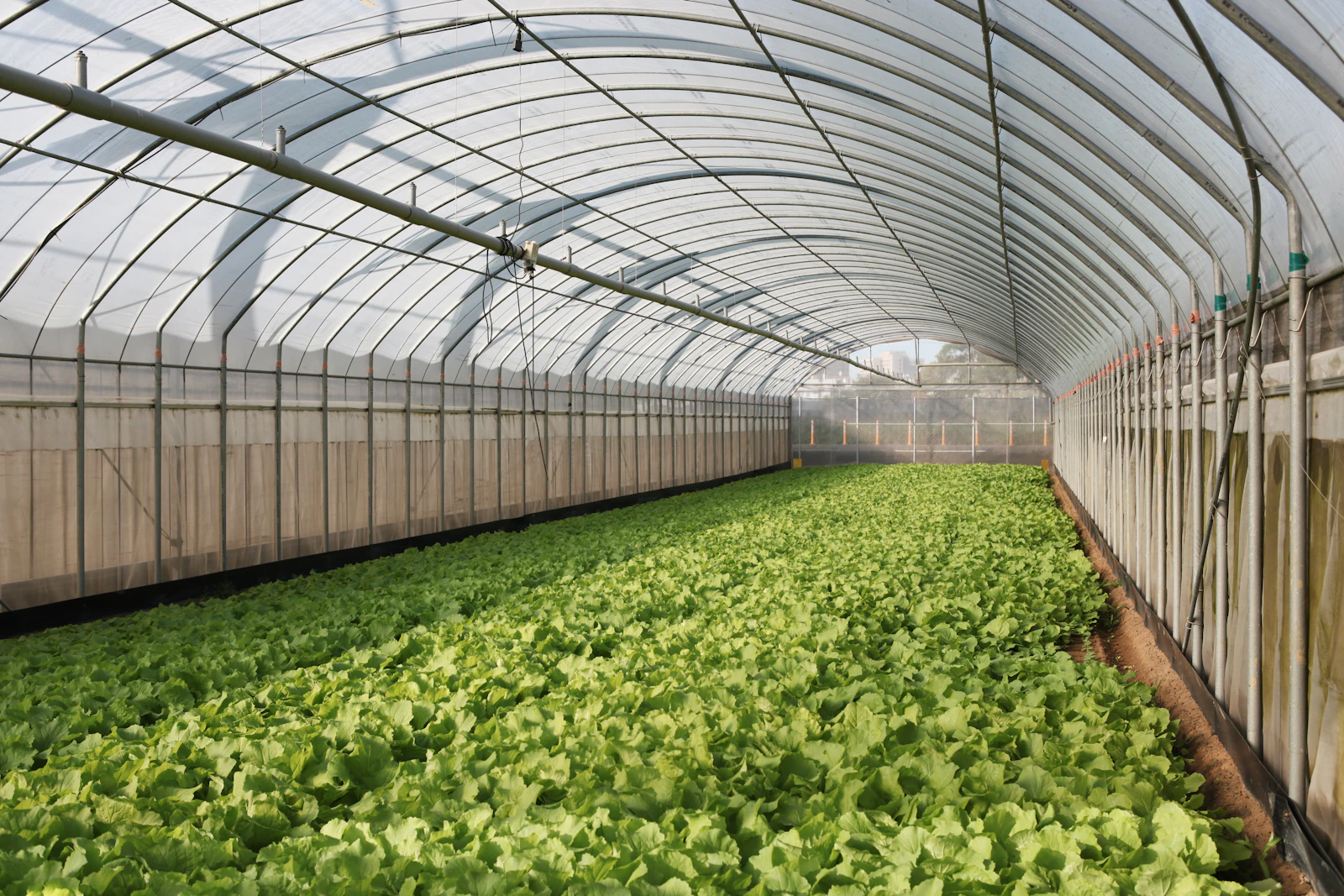
What does a smart farm IoT system include?
A smart farm system has five layers, and most failures happen in the ones nobody priced. The sensors take readings. Gateways collect them. A network and power supply keep the gateways online across the whole site. Software turns readings into a dashboard and alerts. Integration ties it to the climate, fertigation or irrigation controllers already on the farm.
Our wider IoT solutions page explains how we deliver the same layers for offices, warehouses and cold rooms. On a farm the distances are longer, the heat is harder on electronics, and the person who needs the alert is often out in the field rather than at a desk.
| Layer | Typical parts | What goes wrong without care |
|---|---|---|
| Sensors | Temperature, humidity, CO2, soil moisture, EC and pH probes, water level, power meters | Probes drift, sit in direct sun or get damaged by workers |
| Gateways | LoRaWAN gateways, Wi-Fi access points, cellular modems | One gateway placed for convenience leaves the far houses silent |
| Network and power | Outdoor links, fibre or Starlink backhaul, solar or PoE power | Equipment overheats or loses power and nobody notices |
| Dashboard and alerts | Web dashboard, WhatsApp, SMS or email alerts, history and reports | Alerts go to a mailbox nobody reads |
| Integration | Existing climate, irrigation or fertigation controllers | Two systems disagree and the team trusts neither |
What do we do, and what does the grower decide?
We handle the IT and IoT side only: choosing and installing the sensors, gateways, network, power, dashboard, alerts, security and registration. We do not sell greenhouses, hydroponic or irrigation systems or climate-control machinery, and we do not give crop or agronomy advice.
The grower or their agronomist sets the targets: the temperature band for a crop, the humidity limit, the moisture level that should start irrigation. We make sure the readings behind those decisions are accurate, arrive on time and reach a person when something goes outside the band. That split keeps responsibility clear and means the agronomy stays with people who know the crop.
Which sensors make sense in a UAE greenhouse or open field?
Start with the readings that already drive a decision on the farm, not with every sensor a catalogue offers. In a greenhouse that usually means air temperature, humidity and CO2 at crop height, plus the state of fans and cooling pads. Our post on greenhouse climate monitoring sensors covers placement in detail.
Hydroponic and vertical farms add nutrient solution readings such as EC, pH, water temperature and tank level, covered in hydroponic and vertical farm monitoring. Open fields lean on soil moisture and flow, and smart irrigation controllers compared with timers explains where sensor data helps. Farm CCTV and perimeter security, and AI crop disease detection with cameras and sensors, sit on the same network.
How do heat, dust, humidity and distance change the design?
UAE farms punish electronics that were designed for an office. Summer heat inside a sealed box in direct sun goes well beyond the outside air temperature, so enclosures need shading, ventilation and parts rated for the heat. Dust gets into fans and connectors. Greenhouses run humid, and coastal farms add salt in the air.
Distance is the other factor. Farms in Al Ain, Liwa, Ras Al Khaimah, Fujairah and the Dubai outskirts often spread over large plots with no cabling between buildings. That pushes the design towards LoRaWAN for sensors and point-to-point Wi-Fi for cameras and offices, covered on our farm Wi-Fi and LoRaWAN page. Where there is no fibre at all, Starlink for farms and remote sites provides the internet connection.
Do farm IoT systems need TDRA registration?
Commercial IoT services in the UAE fall under TDRA rules, and registration is part of our scope rather than something left to the farm. TDRA runs a registration service for Internet of Things services, and the radio equipment we install has to be type approved for use in the UAE. We prepare the paperwork and keep a record of what was registered.
How is a farm IoT network kept secure?
Every sensor gateway, camera and controller is a small computer, and on a farm it often sits in a remote corner where nobody checks it. We put IoT devices on their own network segment, change default passwords, keep remote access behind a VPN with multi-factor sign-in, and keep firmware updated. Our post on farm IoT security covers the detail, and the same thinking runs through our IoT service.
Why does farm technology matter in the UAE?
Growing more food locally is national policy, and reliable data is part of doing it at scale. The UAE National Food Security Strategy 2051 aims to build sustainable food production using modern technologies and to enhance local production. For a farm, that comes down to practical questions: is the greenhouse inside its band tonight, and who gets told if it is not?
How does a smart farm project run, and what does it cost?
Every project starts with a site visit, because coverage, power and cable routes cannot be judged from a map. We walk the plot, check where the internet arrives, test radio coverage, look at existing controllers and agree with the grower which readings and alerts matter.
You then get a written scope and a fixed quote. Projects typically run from AED 2,500 to AED 30,000 depending on the size of the site and the number of sensors, and larger farms are split into phases. Installation ends with every sensor tested on the dashboard and a test alert sent to each person on the list. To arrange a visit, tell us where the farm is and what you grow.
Frequently asked questions
Often, yes. Many greenhouse climate, fertigation and irrigation controllers expose their data through Modbus, an API or a data export, and we can bring those readings into the same dashboard. Where a controller is closed and exposes nothing, we add independent sensors alongside it instead. We confirm what is possible during the site visit.
No. The targets belong to the grower or their agronomist, because they depend on the crop, the variety and the growing method. We set up the dashboard and alerts around the numbers you give us, and make sure the readings are accurate and the alerts reach the right people when something drifts outside them.
Good ones do, if they are chosen and mounted properly. We use parts rated for high temperatures, shade enclosures from direct sun, use radiation shields for air sensors and keep electronics away from cooling pad spray. Probes still drift over time, so the handover includes a simple calibration and check routine.
Alerts go to phones, not just a dashboard. We can send them by WhatsApp, SMS or email, with an escalation to a second person if the first does not respond. Each alert says which house or zone, which reading and its current value, so the person can act without logging in.
The sensors and gateways keep working locally, but remote alerts and dashboards need an internet connection. Where fibre or a strong mobile signal is available we use it. On remote farms without either, Starlink is usually the answer, with a mobile connection as backup where there is coverage.
Written by Srinivasan Ramachandran, Founder, Listonics · Last reviewed November 6, 2026