CCTV and Perimeter Security for Farms and Agricultural Land in the UAE
A farm is not an office with a bigger car park. Long fences, remote pump houses and no mains power change how CCTV has to be built.
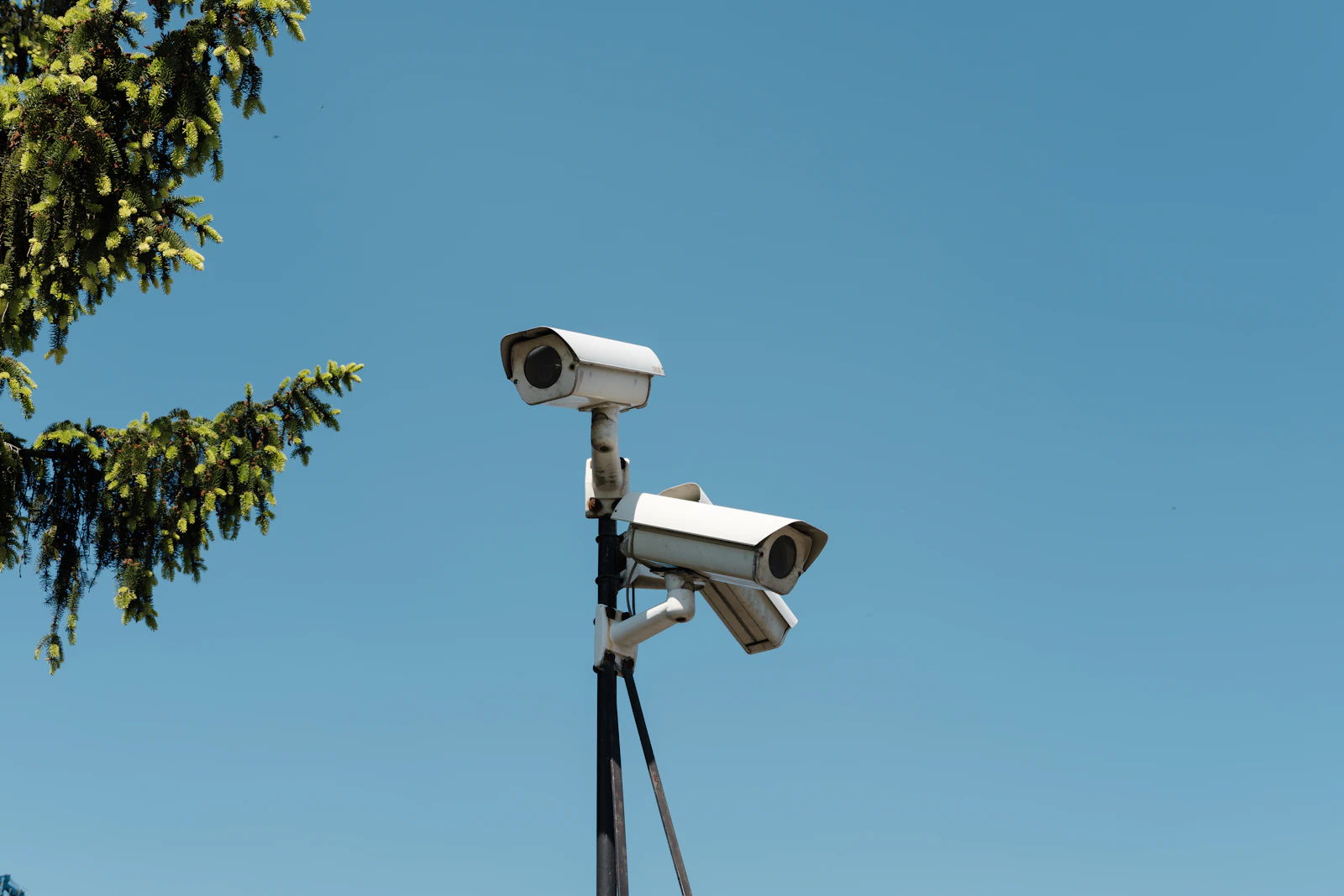
Farm CCTV in the UAE works best when you protect the points that matter, such as gates, pump houses, stores and animal pens, rather than trying to film the whole fence. Use thermal or analytics cameras on long perimeters, plan power and network links before choosing cameras, record on site, view remotely over a secured connection, and use an approved installer.
Key takeaways
- Cover the gates, pump houses, stores, fuel and livestock areas first; a whole perimeter is rarely worth filming end to end.
- Long, dark fence lines suit thermal cameras or cameras with intrusion-line analytics more than ordinary cameras.
- Power and the network link decide where a camera can go, so survey them before picking hardware.
- Record on site and view remotely through a secured connection, never through ports opened on the router.
- In Dubai, the regulated installation goes through a SIRA-approved contractor; other emirates have their own rules, so check locally.
What does a farm actually need to protect?
A farm needs to protect the few places where theft, damage or loss would hurt most, not every metre of fence. On most UAE farms that means the main gate and any side gates, the pump house and well, the fuel and fertiliser store, the equipment shed, the greenhouse doors and the livestock pens. These are where people and vehicles come and go, and where a missing pump or an open gate costs real money.
Start with a simple site map and mark each point with what you want a camera to tell you. At a gate, you want to identify a vehicle and see who got out. At a pump house, you want to know the door opened at night. Over a pen, you may simply want to check animals are calm without driving out at midnight. Each of those is a different camera job, and writing them down first stops you buying the same camera for every pole.
Farms in Al Ain, Liwa, Ras Al Khaimah, Fujairah and the outskirts of Dubai share the same problems: long distances between buildings, patchy mains power at the edges, dust, heat and humidity, and staff housing that may be some way from the main gate. Those factors shape the design more than the camera brand does.
Cameras, intrusion lines or thermal: which suits a long perimeter?
For a long fence line at night, thermal cameras or cameras with intrusion-line analytics usually do the job better than ordinary cameras watched by a person. A normal camera can film a fence, but nobody watches hours of empty desert footage, and at night with no lighting most cameras see very little at a distance.
An intrusion line is a virtual line drawn across the camera's view. When something crosses it, the camera or recorder raises an alert and marks the recording. Thermal cameras see heat rather than light, so a person or vehicle stands out clearly in the dark, though they will not show a face or a number plate. A common pattern is thermal or analytics cameras along the perimeter to detect, and ordinary higher-resolution cameras at the gates to identify.
- Gates and entrances: ordinary cameras with good lighting, set to identify faces and vehicles.
- Long fence lines: thermal cameras or analytics cameras with intrusion lines, to detect and alert.
- Pump houses and stores: a camera on the door plus a simple door sensor, so an opening raises an alert even if nobody is watching.
- Livestock pens: wide-view cameras for checking, often with infrared for night viewing.
- Expect false alerts at first from animals, blowing sand and heat shimmer; zones and sensitivity need tuning over the first weeks.
Analytics features built into cameras and recorders are useful but not magic. Our article on AI camera analytics explains what they can and cannot reliably do.
How do you power a camera pole far from the buildings?
You power a remote camera pole either by running power and network cable to it, by extending power over Ethernet, or by fitting a solar panel and battery at the pole. Which one fits depends on the distance, the ground between the pole and the nearest building, and how much the camera and its link draw.
Power over Ethernet carries power and data on one cable and is the tidiest option, but a standard run is limited to about 100 metres. PoE extenders can stretch that further in steps, which suits a pump house a few hundred metres away. Beyond that, a solar pole with a sealed battery and a wireless link is often more practical than trenching cable across the farm.
Solar poles need honest sizing. The battery has to carry the camera, any infrared lighting and the radio through the night and through dusty days when the panel produces less. Panels need cleaning, batteries age faster in heat, and enclosures need ventilation and shade. We size these from the actual equipment list rather than a catalogue figure, and we design the network side so a pole that loses power shows up as an alert rather than a silent gap.
How do the cameras connect back to the recorder?
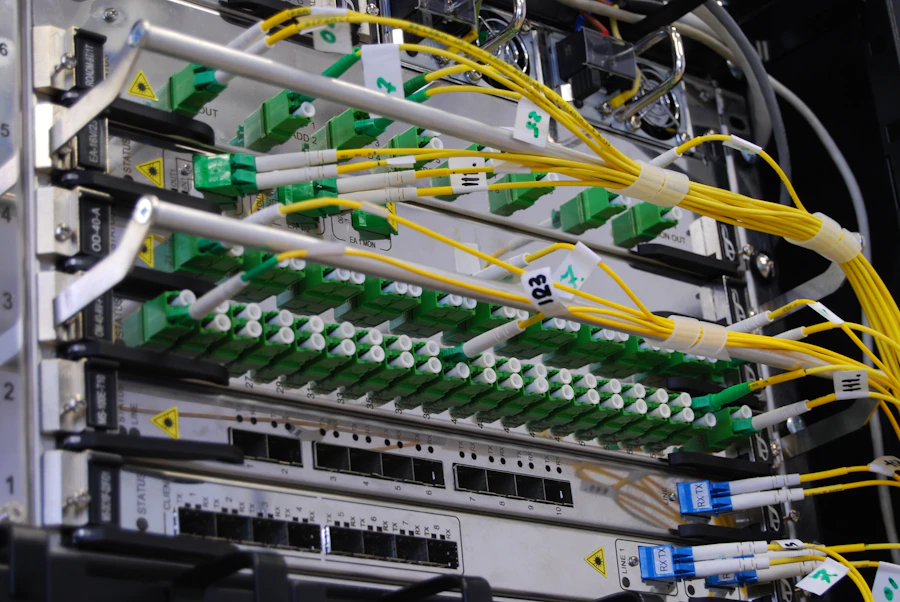
Cameras connect back over buried network or fibre cable where the distance is short enough, and over point-to-point wireless links where it is not. Fibre is the right answer between buildings that are far apart, because it carries data over long distances and is not affected by lightning or electrical interference from pumps and motors.
For poles out on the fence line, outdoor point-to-point radios with a clear line of sight are common. They need mounting high enough to clear trees, palms and stacked equipment, and a check that the path stays clear as crops grow. The same backbone often carries farm Wi-Fi and sensor gateways, which is why we plan it once; our page on farm Wi-Fi and LoRaWAN covers that wider network.
Keep the cameras on their own network segment, separated from the office PCs and from any sensor or irrigation controllers. Cameras are small computers with their own weaknesses, and a farm's camera network should never be a route into its accounts or its controllers. The approach is the same one we use for IoT and connected devices.
Where should footage be recorded, and how do you view it remotely?
Record on a network video recorder at the farm, in a shaded, ventilated and locked room, and view it remotely through a secured connection. Recording on site means the cameras keep recording even when the internet link drops, which on remote farms happens more often than owners expect.
Remote viewing is where many farm systems go wrong. Opening ports on the router so a phone app can reach the recorder exposes it to the whole internet, and recorders are scanned for constantly. A VPN, or the manufacturer's secured cloud relay set up properly with strong passwords and multi-factor sign-in, is the safer route. Our cybersecurity work covers this for farms as well as offices.
Where the farm's internet is weak, a Starlink or 4G connection can carry alerts and occasional live viewing, but continuous high-resolution streaming off site uses a lot of data. Set the recorder to send a lower-resolution stream for remote viewing and keep the full-quality recording on site.
Who is allowed to install CCTV on a UAE farm?
In Dubai, security systems including CCTV fall under the Security Industry Regulatory Agency (SIRA), so the regulated installation and approval go through a SIRA-approved contractor. Listonics works with a SIRA-approved partner for that part, while we design and build the network, power and remote access the system depends on.
Farms outside Dubai sit under the rules of their own emirate, and those are not the same everywhere. Before work starts on a farm in Abu Dhabi, Ras Al Khaimah, Fujairah or elsewhere, check with the relevant local authority what applies to your type of site, and choose an installer who is approved there. We would rather you confirm it directly than rely on a summary from us.
What about privacy and data protection on a farm?
Farm cameras often record workers, visitors, delivery drivers and vehicle plates, so the footage is personal data and needs handling with care. The UAE's Personal Data Protection Law sets general obligations to keep personal data secure and confidential, and good practice follows from that.
In practice: point cameras at your own land and buildings rather than neighbours' plots or staff living quarters, put up signs so people know cameras are in use, limit who can view and export footage, keep recordings only as long as you need them, and keep a record of who exported what. Get specific legal advice if the farm processes footage in ways beyond ordinary security.
How Listonics helps with farm CCTV
We start with a site visit to map the points that matter, the distances, the power and the line-of-sight paths. Then we design the network, power and remote access, and our SIRA-approved partner handles the regulated installation in Dubai. You get documentation of every camera, link and password owner at handover. The same backbone can carry the sensors described on our smart farm IoT page, and the office-side approach is set out on our CCTV and access control page. Projects are quoted after a site visit, typically within AED 2,500 to AED 30,000 depending on the size of the site. Tell us about your farm.
Frequently asked questions
Usually not. Filming every metre of a long fence is expensive and produces footage nobody watches. Most farms get better value from cameras at the gates, pump house, stores and pens, plus thermal or analytics cameras on the stretches of fence where people actually try to get in. The site visit is where those stretches get identified.
Yes, if it is sized and built for it. The battery must carry the camera, lighting and radio overnight and through dusty days, the enclosure needs shade and ventilation, and panels need regular cleaning. Batteries age faster in heat, so plan for replacement. A pole that loses power should raise an alert rather than quietly stop recording.
Yes, through a VPN or the manufacturer's secured app set up with strong passwords and multi-factor sign-in. Avoid opening ports on the farm router so the app can reach the recorder directly, because recorders exposed that way are found and attacked quickly. On a weak internet link, view a lower-resolution stream and keep full quality on site.
At first, almost certainly. Intrusion lines and motion alerts react to dogs, goats, birds, blowing sand and heat shimmer. The answer is tuning: drawing zones carefully, adjusting sensitivity, using analytics that classify people and vehicles where the camera supports it, and reviewing alerts over the first few weeks until they become useful rather than noise.
That depends on the emirate. In Dubai, SIRA regulates security systems and the installation goes through a SIRA-approved contractor. Other emirates have their own authorities and rules, so check with the relevant local authority before work starts and use an installer approved there. We can still design and build the network, power and remote access.
Keep it long enough to notice and investigate an incident, and no longer than you need. Many sites settle on a few weeks, but the right period depends on how often the farm is visited and any rules that apply to you. Recorder storage is sized from the number of cameras, resolution and the retention you choose.
Written by Srinivasan Ramachandran, Founder, Listonics · Published Nov 06, 2026 · Last reviewed November 6, 2026 · 1825 words