AI camera analytics in Dubai: people counting, intrusion alerts and number-plate reading
Smart cameras can count people, flag intruders and read plates. Here is what they do well, where they fail, and the rules that apply in Dubai.
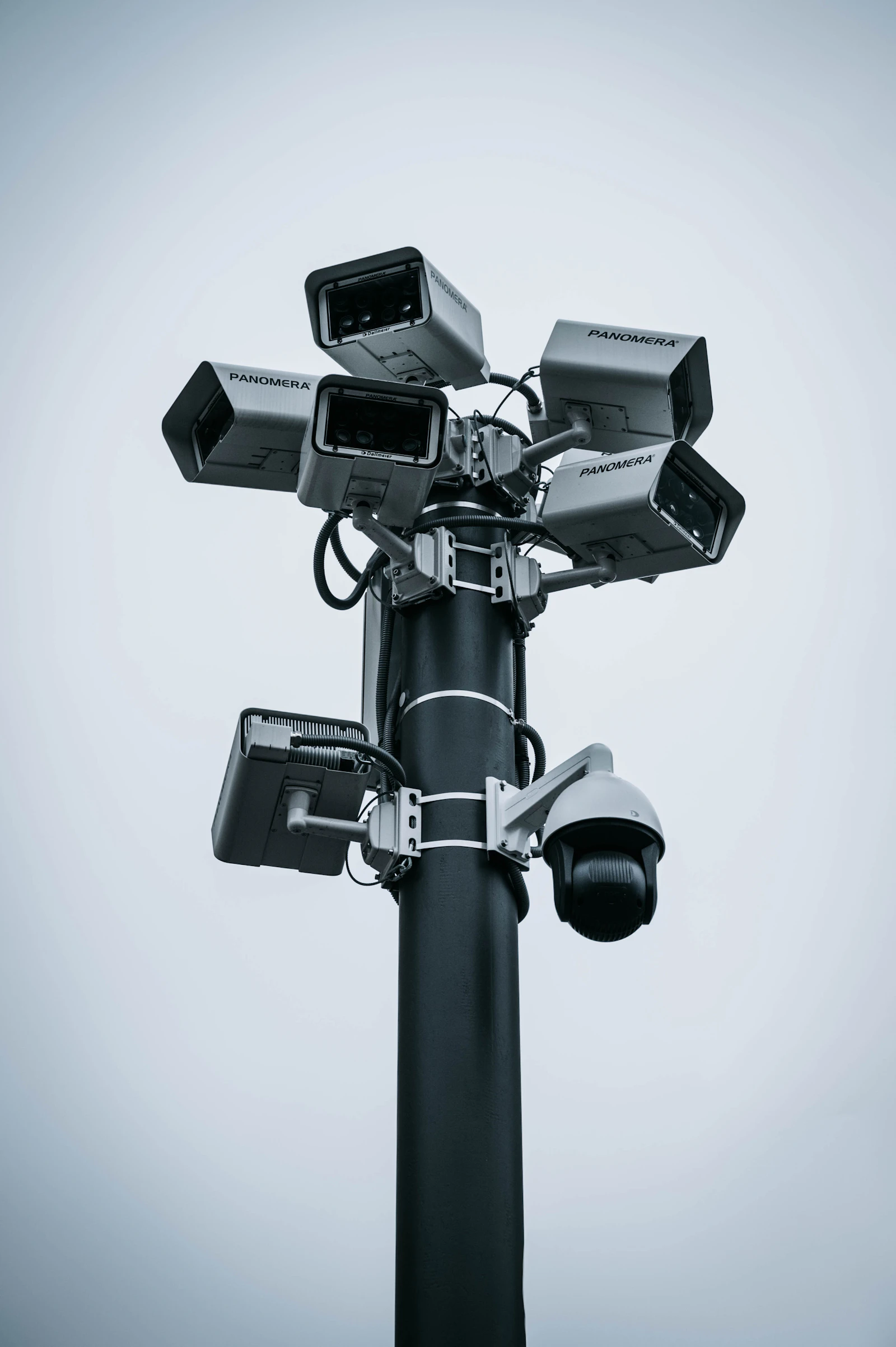
AI camera analytics are features built into modern cameras and recorders that watch the picture for you: counting people, raising an alert when someone crosses a line, or reading number plates. They work well when the camera angle, lighting and tuning are right, and badly when they are not. In Dubai the regulated installation goes through a SIRA-approved contractor.
Key takeaways
- Analytics run on the camera or recorder itself, so the choice of camera and where it points matters more than the software.
- Glare, low sun, headlights, heat shimmer and dust cause most false alarms in the UAE, and every rule needs tuning after installation.
- ONVIF Profile M is the standard that lets analytics events and metadata move between different makers' cameras and software.
- Recording people and number plates is processing personal data, so UAE data protection duties apply: a clear purpose, signs, limited access and a retention period.
- In Dubai, CCTV falls under SIRA: our SIRA-approved partner does the regulated installation, and Listonics does the network, integration and dashboards.
What do AI camera analytics actually do?
They turn a video stream into events a person or a system can act on. Instead of someone watching sixteen screens, the camera or the recorder looks for specific things and raises a flag when it sees them. The analysis usually happens on the device itself, using a small processor built for the job, so only the result travels across the network.
The common features on cameras sold in the UAE today fall into a few groups. Each one answers a narrow question, and the narrower the question, the better it tends to work.
- Intrusion lines and zones: an alert when a person or vehicle crosses a drawn line or enters an area, often only outside working hours.
- People counting: in and out counts at a door, or how many people stand in a zone, useful for shops, showrooms and reception areas.
- Number-plate reading (often called ANPR or LPR): the camera reads plates at a gate or car park barrier and checks them against a list.
- Loitering and object left behind: an alert when someone stays in one place too long, or a bag appears and stays.
- Object classification: telling a person from a car, a cat or a moving shadow, which is what cuts most nuisance alerts.
None of this is general intelligence. A camera that counts people does not know who they are, and a plate reader only reads plates it can see clearly. Treat each feature as a sensor with limits, not a guard.
Where do camera analytics fail?
They fail when the picture is poor, and in the UAE the picture is often poor in predictable ways. Most problems trace back to the camera position, the light, or a scene the analytics were never tuned for, not to the software itself.
Low morning and evening sun shines straight into east and west facing cameras and washes out faces and plates. Headlights at night bloom across a plate reader unless the camera is built for it and set up for it. Heat shimmer over hot tarmac or sand makes distant objects wobble, and a basic motion rule reads that as movement. Dust on the lens, sandstorms and humidity fogging a housing all lower image quality slowly, so analytics that worked in the cool months start missing things in August.
Angles matter just as much. A people counter mounted at the wrong height or angle counts two people walking together as one. A plate reader needs the plate to fill enough of the frame at a shallow angle, so it usually sits close to a barrier where cars slow down, not on a pole at the far end of a car park. On large outdoor sites such as farms and warehouses, long fence lines stretch any single camera too far, so it usually works better to split a perimeter into short, well-lit sections, as our farm CCTV perimeter security guide explains for remote sites.
How do you cut false alarms without missing real ones?
By tuning each rule after installation, against real footage from that site, and then checking it again after the first few weeks. Out of the box, most analytics are set to be cautious, which means many alerts. If staff get twenty alerts a night for palm fronds and cats, they stop looking within a week, and the one real alert is lost with the rest.
Practical tuning steps are simple, but they take time on site. Use object classification so only people or vehicles trigger the rule. Draw intrusion lines rather than large motion zones, and keep them away from trees, flags and roads. Set a minimum object size so birds and insects near the lens are ignored. Add a short dwell time so a person has to stay in the zone for a moment. Schedule rules so a busy loading bay is only watched after hours.
Keep a short log for the first month: every alert, whether it was real, and what caused the false ones. That log is the quickest way to see which camera needs moving, which rule needs a new line, and which spot needs more light. Lighting is often the cheapest fix of all.
What is ONVIF Profile M and why does it matter?
It is the open standard that lets analytics results move between cameras, recorders and software from different makers. Without it, the people counts and alerts from one brand of camera often only work inside that brand's own recorder and app, which locks you in and makes dashboards hard to build.
ONVIF Profile M covers analytics configuration, the streaming of metadata, generic object classification, and defined metadata for vehicles, licence plates, human faces and bodies. It also covers event interfaces for object counting and plate recognition, and it can send events over MQTT, the same lightweight messaging protocol many IoT systems use. That last point is what makes it practical to feed camera events into a wider dashboard.
When choosing cameras, ask whether the specific model is listed as Profile M conformant, not just whether the brand supports ONVIF in general. Profile S, the older and more common profile, covers video streaming but not analytics metadata.
What does analytics do to the network and storage?
It adds load in places people do not expect, so the network has to be planned for it. The video itself still dominates: analytics cameras are usually higher resolution, and many record continuously as well as sending events. Metadata streams are small, but snapshots attached to each alert, plate images and event clips add up across dozens of cameras.
Most cameras are powered over the network cable, and analytics cameras with heaters, infrared and on-board processors draw more power than basic ones. A switch chosen on port count alone often runs out of power budget before it runs out of ports. Storage needs a retention plan agreed up front: how many days of video, how long event clips and plate records are kept, and what happens when the disk is full.
Cameras are also small computers with their own software and passwords, and they should never share a flat network with laptops and the file server. We put them on their own segment with tightly controlled access, the approach described in our guide to IoT network segmentation in the office. Remote viewing goes through a secure route for named staff, not a port opened on the router. This is the same network work we do under our cybersecurity service.
What are your data protection duties when recording people and plates?
Recording identifiable people and number plates is processing personal data, so UAE data protection law applies. The UAE government's data protection page summarises the Personal Data Protection Law, Federal Decree Law No. 45 of 2021, which sets out companies' duties to secure personal data and keep it confidential, gives people rights over their data, and sets rules on transferring it outside the country. Free zones such as DIFC have their own data protection law, so check which regime covers your premises.
In practice, good habits cover most of what the law expects. Have a clear purpose for each camera and each analytics feature, written down. Put up visible signs. Point cameras only where they are needed, and mask private areas and neighbouring properties. Limit who can view footage and plate records, and keep an access log. Set a retention period and let the recorder delete old footage automatically. Be careful with cloud services that store footage or plate lists outside the UAE.
Face recognition raises the stakes further and is rarely needed by a small business. If someone suggests it, ask what problem it solves that a door counter or an intrusion line does not. This is general guidance, not legal advice, so take legal advice for anything beyond a standard office or site setup.
Who installs camera analytics in Dubai, and what does Listonics do?
In Dubai, security systems including CCTV are regulated by the Security Industry Regulatory Agency (SIRA), so the regulated installation and approval go through a SIRA-approved contractor. Listonics works with a SIRA-approved partner who carries out that part of the job, including setting up the analytics on the cameras and recorder. Other emirates have their own rules, which the partner confirms for each site.
Listonics handles what the cameras depend on and what happens to their data afterwards: the network design, cabling and power budget, the separate camera network, secure remote access, and the integration that takes analytics events into something useful. That might be a dashboard showing footfall by hour, an alert sent to a named phone when a line is crossed after hours, or plate events joined to visitor records. Where sites also run sensors, the same events can sit alongside temperature or door readings through our IoT service.
You get one plan and one point of contact. Our CCTV and access control installation page explains how the work is split. Projects are quoted after a site visit and typically fall between AED 2,500 and AED 30,000, depending on the number of cameras, the cabling and the integration needed.
Frequently asked questions
Usually yes. The analytics run on a processor inside the camera or the recorder, so older or basic cameras cannot do it. Some recorders add analytics to ordinary cameras, but results depend on picture quality. For plate reading, a dedicated plate camera mounted close to a barrier works far better than a general-purpose camera.
No. Analytics are good at watching specific lines, doors and gates without getting tired, but they cannot respond, judge context or deal with people. They work best as an early warning that sends a clip to a guard, manager or monitoring service, who then decides what to do.
Usually because the rule watches for any motion rather than people or vehicles, or because it covers trees, roads, shadows and reflections. Switching on object classification, drawing tighter intrusion lines, setting a minimum object size and adding a short dwell time cut most nuisance alerts. Bad lighting is the other common cause.
It can be, but plates linked to visits are personal data, so data protection duties apply. Have a clear purpose, put up signs, limit who sees the records, and delete them after a set period. In Dubai, the CCTV installation itself must go through a SIRA-approved contractor. Take legal advice for anything unusual.
Yes, if the cameras or recorder expose their events in an open way. ONVIF Profile M covers analytics metadata and events, including over MQTT, and many makers also offer their own interfaces. Listonics builds the integration into dashboards, alerts to named phones, or records in your existing systems.
No. The regulated installation and approval in Dubai go through our SIRA-approved partner. Listonics designs and builds the network the cameras run on, keeps them on a separate segment, sets up secure remote viewing, and builds the dashboards and integrations that use the analytics events.
Written by Srinivasan Ramachandran, Founder, Listonics · Published Nov 06, 2026 · Last reviewed November 6, 2026 · 1927 words