Corporate Event AV and Staging Checklist for Dubai
The hall is booked and the date is set. Here is the stage, AV and decor to settle before you sign, so show day runs without surprises.
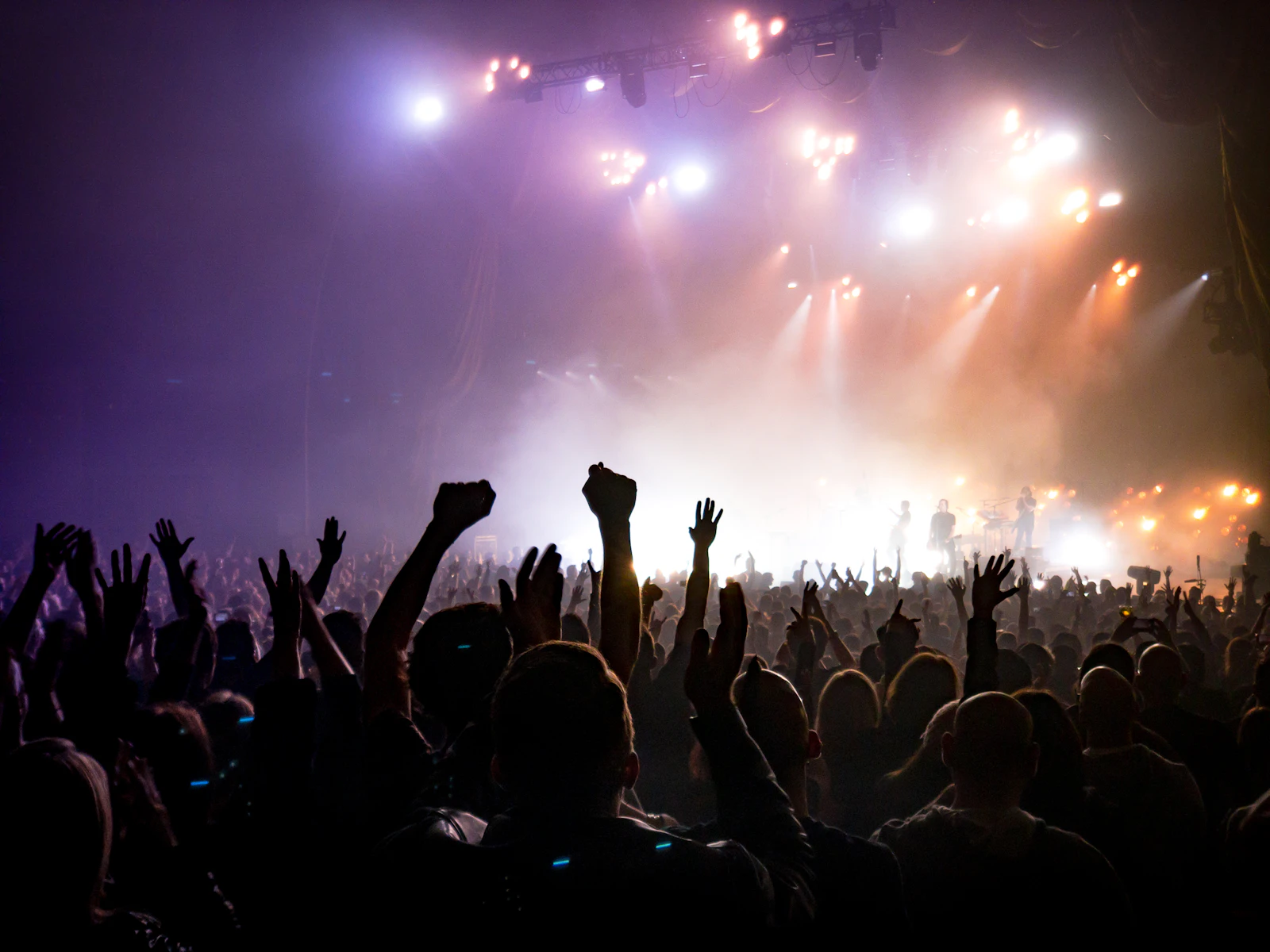
An event stage lives or dies on preparation. Before you book, settle the room and sightlines, the staging and its approvals, whether the big picture is an LED wall or projection, how the sound and wireless are planned, and the connection a stream runs on. This checklist covers each decision in order.
Key takeaways
- Design to the room and the sightlines first, then choose the kit, not the other way round.
- A stage is a loaded temporary structure, so rigging and life-safety approvals belong in the schedule early.
- Pick an LED wall or projection by the ambient light and viewing distance, not by habit.
- Wireless microphones must use UAE-approved frequencies, so coordinate channels before show day.
- Keep the live stream off the venue's public Wi-Fi, on a connection planned for the event.
Start with the room, not the kit list
Every good production starts from the space and the audience, not from a list of equipment. Walk the venue, or get a scaled plan, and settle the basics: where the stage sits, where the audience is, where the sun or the house lights fall, and what the sightlines are from the back and the sides. A design built around the room is what stops the front rows being dazzled and the back rows being unable to read the screen.
Write down what the event actually has to do, too. A keynote with slides, a panel with roving microphones, an awards show with walk-on music and video, and a product reveal with a live demo all need different rigs, and the brief decides the budget far more than the venue does. This is the stage the whole of our event stage, AV and decor work is designed around.
Staging, rigging and load-in
Once the layout is set, the staging follows. A stage carries real weight once trusses, screens and lighting hang over it, so it is an engineering job with rated loadings and a rigging plot, not a few boxes pushed together. Confirm who is responsible for the structure, that it is built within its limits, and that the life-safety approvals are in hand, including sign-off from Dubai Civil Defence for the temporary structure and any effects such as haze or pyro.
Nail the load-in and load-out windows with the venue early, because they shape the whole schedule. Many Dubai venues only release the room the day before, and an outdoor or mall site may restrict build hours, so the time to rig, test and rehearse is often tighter than it looks on paper. Agree the access, the lift or dock, and the strike deadline in writing.
Screens and content: LED wall or projection
The biggest visual decision is usually the screen, and the honest answer depends on the room rather than fashion. An LED video wall stays bright in daylight and a lit ballroom and scales to very large sizes, while projection gives one continuous image and is often cheaper for a modest stage in a room you can darken. We design the screen to published AV practice, in line with the AVIXA standards for the trade, so it is sized for the farthest viewer rather than the budget line.
Settle the content early as well: the aspect ratio, who supplies the slides and video, and who switches between them live from a vision desk. A screen with nothing planned to play on it is a common and avoidable day-one problem.
| Factor | LED video wall | Projection |
|---|---|---|
| Bright room or daylight | Stays bright and readable | Washes out unless the room is dark |
| Large audience, long throw | Scales in modular panels | Needs a powerful projector and a clear throw |
| Modest stage, tight budget | Higher day rate | Often cheaper to achieve |
| One unbroken image | Faint panel seams up very close | A single continuous picture |
Lighting that works on camera and in the room
Lighting does two jobs: it makes the speakers and the stage look right, on camera and to the room, and it sets the mood between segments. Plot it to the actual sightlines so the key light flatters the speakers without blinding the front row or washing out the screen behind them. For anything filmed or streamed, the lighting and the camera settings have to be planned together, or the footage looks flat and grey.
Program the lighting states to the running order rather than improvising them live. A simple cue stack, walk-in look, keynote look, panel look, awards look, means the operator presses go on the next state instead of rebuilding it under pressure while the audience waits.
Sound and going wireless
Size the PA to the room so the back row hears clearly without the front row being deafened, and set up stage monitors or in-ear monitors so the speakers can hear themselves. Clean audio is the part an audience only notices when it is wrong, and it is worth more rehearsal time than most schedules give it.
Wireless microphones and in-ear systems share the radio spectrum, and in the UAE that equipment has to use approved frequencies. Coordinate the channels in advance and use kit that holds TDRA type approval, so a dropout or interference does not become a problem mid-speech. In a venue packed with other wireless systems, planning the frequencies is the difference between clear sound and a crackling microphone.
Connectivity, streaming and the IT underneath
If any part of the event is online, streamed to a remote audience, a cloud-based demo, or cashless payment, the connection it runs on matters as much as the stage. The one reliable way to lose a live stream is to put it on the venue's public Wi-Fi, which is sized for guests checking email and collapses when the hall fills up.
Plan a dedicated connection with a backup, the same way our event and exhibition IT support does, on a network we build rather than borrow, with satellite internet as failover where the venue line is weak. For an exhibition stand rather than a stage, the pre-show GITEX exhibitor IT checklist covers the same ground for a booth.
Show day: rehearse, operate, strike
Build in a full technical rehearsal before doors, not a quick line check. Run the cues, the microphone handovers, the video playback and the walk-ons in order, because the rehearsal is where the problems surface while there is still time to fix them. Agree who is calling the show and keep a clean comms channel between the operators, the stage manager and the crew.
Keep an operator on each desk through the event rather than leaving it on autopilot, so a late change to the running order is handled calmly. When it ends, the strike returns the venue to a clean site on the schedule it needs the room back, with everything that came in going back out. If you want this run end to end, you can talk to us before the date.
Frequently asked questions
It depends on the room. An LED video wall stays bright in a lit ballroom or in daylight and scales to very large sizes, so it suits bright rooms and big audiences. Projection gives one continuous image and is often cheaper for a modest stage in a room you can darken. Decide by the ambient light and the distance to the farthest viewer, not by habit or by price alone.
Yes. Wireless microphones and in-ear monitors use the radio spectrum, and that equipment has to use frequencies approved for use in the UAE and hold type approval. In practice it means coordinating channels in advance and using compliant kit, so your microphones do not drop out or interfere with the venue's other wireless systems during a speech.
Yes. We set up the cameras, the vision mix and the stream or recording output as part of the production. The key is the connection: we plan a dedicated internet line with a backup rather than relying on the venue's public Wi-Fi, so the stream stays up when the hall is full and you get a clean recording afterwards as well as the live feed.
It varies with the size of the rig and the venue's access rules, but the common mistake is assuming the room is available earlier than it is. Many Dubai venues release the space only the day before, so the build, testing and a full technical rehearsal have to fit a tight window. Agree the load-in and strike times with the venue in writing early, and we schedule around them.
We handle the whole production as one team: the staging and rigging, the lighting, the screens and content, the sound, and the decor, plus the event IT underneath if you need it. Using a single team means one design and one point of accountability on site, rather than a staging company, an AV crew and a freelance operator meeting for the first time on show morning.
Written by Srinivasan Ramachandran, Founder, Listonics · Published Nov 02, 2026 · Last reviewed November 2, 2026 · 1430 words